
Views: 0 Author: Site Editor Publish Time: 2026-08-26 Origin: Site
Many buyers select wearable light therapy devices based solely on wavelength specs. They focus heavily on LED count. They often overlook two critical engineering pillars. These pillars actually dictate real-world efficacy. We refer to power management and heat dissipation. Without a stabilized power source, LED irradiance drops rapidly. As the battery drains, light intensity fades. You end up under-dosing your target tissues. Furthermore, without proper thermal control, LEDs overheat. This trapped heat reduces diode lifespan. It can even cause skin discomfort during prolonged use. This guide provides a robust technical evaluation framework. You will learn to assess battery consistency carefully. You will also understand advanced thermal architecture. We aim to help you confidently evaluate these devices. You can use this knowledge when shortlisting wearable phototherapy products for clinical or home use.
Dose Consistency Relies on Battery Quality: A high-capacity wearable light therapy battery ensures that irradiance remains stable from the first minute of treatment to the last, preventing under-dosing.
Heat Degrades LED Lifespan: Flexible wearables require advanced thermal management compared to rigid full-body panels, as trapped heat accelerates LED degradation and shifts wavelength outputs.
Form Factor Dictates Engineering: Devices like a Red Light Therapy Belt or Red Light Therapy Leg Wrap require a careful balance—batteries must be compact enough for mobility but robust enough to drive clinical-level power.
Safety and Compliance: Proper thermal regulation is a non-negotiable safety standard for devices operating in direct contact with human tissue.
Cheaper batteries lack proper internal regulation. They experience severe voltage drops as they deplete. This causes a silent reduction in light output. A 20-minute session at 20% battery delivers fundamentally less energy than a session at 100% battery. We measure therapeutic light energy in Joules. Joules equal irradiance multiplied by time. If the battery cannot sustain peak voltage, your total energy dose falls dramatically. You might believe you are receiving a clinical dose. In reality, the device under-delivers.
Users cannot see this drop off with the naked eye. Human vision adapts to slight changes in brightness. Therefore, you will not notice the dimming effect. You continue your session assuming full efficacy. This hidden variable ruins long-term results. We see many users abandon phototherapy due to this exact issue. They blame the therapy itself. They should actually blame poor power management.
High-tier wearables solve this voltage drop using advanced driver circuits. These drivers act as power traffic controllers. They ensure the LEDs draw a consistent current. They maintain this current regardless of the battery's charge state. When the battery drains, the driver circuit works harder. It boosts the available voltage to meet the LED array demands. Constant current drivers guarantee uniform output. They keep the light intensity perfectly stable until the battery completely dies.
This technology separates medical-grade wearables from cheap consumer gadgets. Designing a flexible circuit board with stable drivers takes expertise. Engineers must protect the circuitry from bending and flexing. They must also ensure minimal energy loss during the voltage conversion process. You should always verify if a manufacturer uses constant current architecture.
Evidence-based photobiomodulation requires precise dosing. Researchers spend years defining specific energy requirements for cell recovery. Unpredictable battery performance invalidates these treatment protocols. It delivers inconsistent energy to the target tissue. When treating deep muscle inflammation, you need exact energy penetration. Under-dosing fails to trigger cellular mitochondria. Over-dosing can inhibit the healing response.
A reliable power source removes the guesswork. You can strictly follow clinical guidelines. If a protocol demands 40 Joules per square centimeter, a stable device delivers exactly 40 Joules. Precision dictates outcomes. When evaluating clinical efficacy, predictable energy delivery stands as the most critical factor.
You must assess milliamp-hours (mAh) relative to the total wattage of the LED array. A high mAh rating sounds impressive on paper. However, it is entirely irrelevant if the device draws power too quickly. You have to look at the system as a whole. An array with 300 high-power LEDs drains a battery much faster than a 50-LED device.
A premium wearable light therapy battery balances capacity and output demand seamlessly. It stores enough energy to support multiple high-intensity sessions. You should calculate the expected run time. Divide the battery capacity (in watt-hours) by the device's total power consumption. A quality device will run for at least an hour at maximum brightness. It should achieve this without triggering low-battery warnings.
The industry is shifting toward ultra-thin, flexible battery architectures. We now see advanced lithium-polymer and even early solid-state designs. These allow devices to contour closely to the body. They eliminate the need for rigid, bulky power packs. Bulky batteries ruin the wearable experience. They pull the device away from the skin. This gap reduces light penetration efficiency.
Cycle life is another crucial evaluation metric. You need to know how many charge cycles the battery can withstand. Over time, all batteries degrade. We consider a battery viable until its maximum capacity drops below 80%. High-quality cells offer 500 to 800 full cycles before reaching this threshold. Cheaper cells may degrade after just 150 cycles. This rapid degradation forces early replacement.
Engineers face a difficult balancing act. They must provide enough power for deep-tissue wavelengths. Wavelengths like 850nm near-infrared (NIR) require substantial energy. At the same time, they must keep the device lightweight. Users want to wear these devices during active recovery. Heavy batteries restrict movement. They cause the wrap to slide down the body during use.
Advanced designs distribute the battery weight. Instead of one thick block, engineers use multiple thin cells. They spread these cells across the device's surface. This maintains perfect balance. It enhances user comfort significantly. It also ensures the LEDs receive adequate power for deep tissue penetration.
Table 1: Battery Specification Standards
| Specification Category | Basic Consumer Grade | Clinical Wearable Grade |
|---|---|---|
| Cell Chemistry | Standard Lithium-Ion (Rigid) | Advanced Lithium-Polymer (Flexible) |
| Driver Architecture | Direct Drive (Voltage Drops) | Constant Current Driver |
| Cycle Life (to 80%) | 150 - 250 Cycles | 500+ Cycles |
| Weight Distribution | Single localized heavy block | Distributed thin-cell layout |
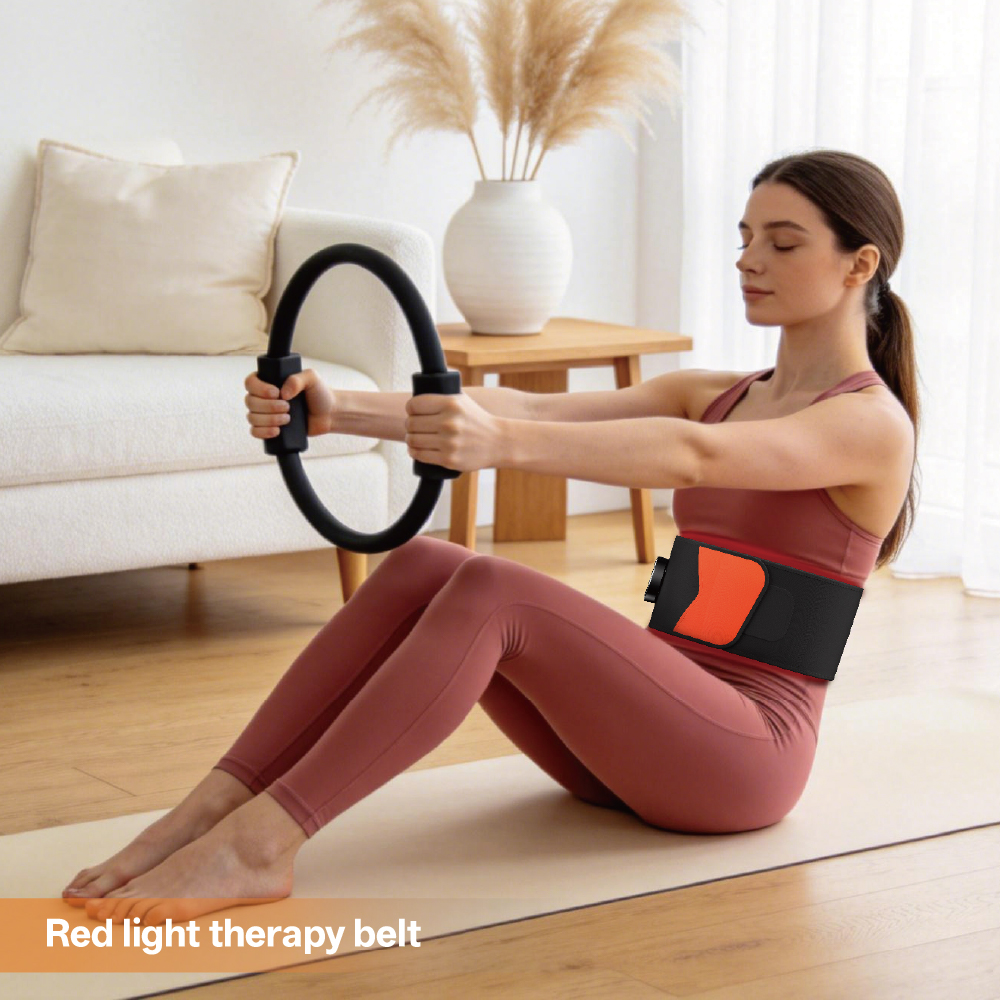
Unlike rigid LED panels, flexible wearables face severe thermal challenges. Rigid panels use built-in cooling fans. They feature thick aluminum heat sinks. They have plenty of internal space for passive airflow. Flexible wearables lack all these advantages. They sit completely flush against the skin. This positioning eliminates passive airflow entirely.
When LEDs generate light, they also generate heat at the diode junction. In a wearable, this heat has nowhere to go. It reflects back into the device circuitry. It also transfers directly to the user's skin. Managing this trapped heat requires highly specialized materials. It demands intelligent engineering that passive panels never need to consider.
Smart devices monitor internal temperatures continuously. They use embedded thermistors to track heat buildup. If temperatures approach unsafe levels, the device takes action. It safely throttles the power output. This prevents skin burns and protects the circuitry. Throttling reduces the LED intensity temporarily. Once the device cools down, power returns to normal.
Poorly designed devices ignore this mechanism. They simply overheat. They continue pushing maximum current into hot LEDs. This creates a dangerous scenario. It risks thermal runaway within the battery. It also exposes the user to painful skin irritation. Active thermal throttling is a mandatory safety feature for any modern wearable.
Unmanaged heat trapped in flexible silicone physically degrades the diode. It degrades the neoprene layers as well. High temperatures melt internal adhesives. More importantly, heat damages the LED semiconductor directly. This damage permanently reduces the diode's lifespan. An LED rated for 50,000 hours might fail after just 5,000 hours if consistently overheated.
Furthermore, excess heat alters the precision of the emitted light. As a diode gets hotter, its output wavelength shifts. An 850nm diode might shift to 860nm or higher. This shift pulls the light out of the optimal therapeutic window. You lose the intended clinical benefit. Therefore, strict temperature control ensures wavelength stability.
Manufacturers must use specific materials to combat heat. We evaluate the use of thermally conductive substrates. These substrates pull heat away from the LED base. They spread it across the entire device surface. This broad distribution prevents dangerous localized hotspots.
Medical-grade backing materials play a huge role here. Quality devices use breathable, heat-dissipating fabrics on the exterior. They insulate the side touching the skin while releasing heat outward.
Heat Absorption: Conductive layers pull heat from the LED junction.
Lateral Distribution: Graphite or copper sheets spread the heat horizontally across the belt.
External Dissipation: The outer fabric layer vents the ambient warmth away from the body.
A standard Red Light Therapy Belt covers a large surface area. We primarily use it for core, lower back, and abdominal treatments. Because it covers so much tissue, it requires a massive array of LEDs.
The primary engineering hurdle involves battery capacity. Driving hundreds of LEDs simultaneously drains power rapidly. The belt requires the highest battery capacity among wearables. However, it must maintain deep flexibility. Users wear these belts while sitting at a desk or walking around the house. The battery cannot dig into the wearer's ribs or spine. Engineers typically embed flat, distributed power cells along the outer strap. This keeps the core therapy area highly flexible while providing maximum energy.
The use case for a leg wrap differs entirely. We use it for joint recovery, muscle fatigue, and targeted limb therapy. It treats knees, elbows, and calves. These areas move constantly.
This creates a distinct engineering hurdle. A Red Light Therapy Leg Wrap requires extreme flexibility. It also needs robust internal wiring. The repeated bending of a knee joint puts immense stress on internal circuits. If the wiring is brittle, it will snap. Battery placement requires precise calculation. The battery must not impede joint articulation. It cannot create localized heat spots near sensitive tendons. Engineers usually place the power source at the very top or bottom edge of the wrap. This keeps it away from the high-flexion zones of the joint.
When evaluating options, you want to look for specific quality indicators. These green flags signal a trustworthy engineering process. They show the manufacturer respects user safety and clinical efficacy.
Transparent battery specifications: Look for clear listings of mAh, specific cell types, and estimated cycle life. Honest brands share these numbers proudly.
Listed maximum operating temperatures: Safe devices publish their thermal limits. They clearly explain their auto-shutoff safety features.
UL or CE certifications: These certifications guarantee battery safety. They prove the device passed rigorous electrical compliance testing.
You must also recognize warning signs. Many cheap devices use deceptive marketing to hide poor internal components. Avoid products that show the following traits.
Vague claims of "long battery life": Ignore brands that boast about time without specifying output power (mW/cm²) at a low charge. 10 hours of weak light is useless.
Overheating issues: Avoid devices that become noticeably hot to the touch within 5 minutes of use. This indicates a complete lack of thermal management.
Poor warranty coverage: Step away if the warranty fails to address battery failure or LED burnout specifically. High heat kills LEDs; manufacturers hiding this risk will deny your claim.
Table 2: Comparison Chart - Quality Checklist
| Evaluation Metric | Green Flag | Red Flag |
|---|---|---|
| Power Output | Stable irradiance listed across full battery cycle. | Only lists "Peak Irradiance" at 100% charge. |
| Heat Control | Thermally conductive backing; cool to the skin. | Traps heat in silicone; causes excessive sweating. |
| Safety Certifications | Valid CE, UL, or FDA clearance numbers provided. | Generic "safe to use" claims without documentation. |
The true value of a wearable light therapy device is not in its peak theoretical output. Peak output means nothing if it only lasts for two minutes. The real value lies in the device's ability to deliver that output consistently. It must do this safely over time. Without proper power regulation, your therapy sessions lose their clinical impact. Without strict thermal management, your device will degrade rapidly and threaten your safety.
When comparing manufacturers, demand transparent technical sheets. Ask for specifics regarding battery cell types. Inquire about their exact thermal dissipation methods. Review the warranty terms for electrical components carefully. Taking these action-oriented next steps ensures you invest in a reliable, effective health tool.
Always prioritize constant current driver architecture over total LED count.
Verify that flexible wraps utilize heat-dissipating external layers.
Demand clear battery cycle life ratings before making a final purchase.
A: It varies by total LED wattage and usage intensity. However, a clinical-grade device should reliably support 3 to 5 full 20-minute sessions at maximum irradiance. It must achieve this without requiring a recharge. If it drains faster, the battery capacity does not match the LED array's demands.
A: No. Near-infrared and red light therapy is non-thermal. Excessive heat is a byproduct of inefficient LED drivers or poor heat dissipation. It is definitely not an indicator of therapeutic efficacy. High heat actually damages the skin and degrades the device.
A: Most high-end flexible wearables use integrated, sealed batteries. Manufacturers do this to maintain moisture resistance and long-term durability. Because you cannot easily replace them, evaluating the initial battery cycle life is critical before purchase. Choose devices rated for at least 500 charge cycles.


