
Views: 0 Author: Site Editor Publish Time: 2026-05-06 Origin: Site
When customers ask us how often they should use a red light therapy mask, they are usually trying to build a routine that feels practical, comfortable, and easy to maintain. In real life, most people do not need a complicated plan—they need a clear schedule they can follow consistently without overdoing it. That is why usage frequency matters so much. With home-use LED masks, the best routine is usually not “more is better,” but rather steady, device-appropriate use based on the manufacturer’s instructions, session length, and personal comfort level. Across consumer guidance and manufacturer-style usage references, a common pattern is 10 to 20 minutes per session, about 3 to 5 times per week, while some products are designed for fewer weekly sessions and others allow more frequent use depending on device design.
From our perspective, a good LED mask routine should be simple enough to fit into normal life. It should match the device’s intended session time, allow your skin and schedule to adjust gradually, and stay easy to repeat week after week. At Shenzhen Mezans Technology Co., Ltd., we focus on practical device use and user-friendly product experience.
For many at-home LED face masks, a commonly referenced starting rhythm is 3 to 5 sessions per week, with each session lasting around 10 to 20 minutes, depending on the device and its built-in program.
That said, there is no one universal schedule for every product. Some mask guides suggest:
2 to 3 times per week for a simple maintenance-style routine, especially for users who prefer a lighter schedule.
3 to 4 times per week as a common mid-range pattern for regular use.
3 to 5 times per week for many mainstream at-home masks, especially when session times are already preset.
So if you want a simple answer, the most practical starting point is: begin with a moderate weekly plan and follow the exact timing recommended for your specific device.
One of the clearest patterns across consumer LED mask guidance is that consistent use is usually preferred over irregular, overly long, or overly frequent sessions. Several manufacturer-style and user-guidance sources emphasize that a steady schedule—rather than occasional long “catch-up” sessions—is the more practical way to use a home device.
This matters because a red light LED mask is typically used as part of a repeatable home routine. In other words, it fits better into a schedule like:
Monday, Wednesday, Friday
Tuesday, Thursday, Saturday
Every other day
3 short weekday evenings plus 1 weekend session
That kind of pattern is easier to maintain than trying to use the mask every day without a clear plan.
If you are using a red light therapy mask for the first time, a gradual start is usually the most comfortable approach. Some usage guides suggest beginning with fewer weekly sessions and increasing only if the device instructions allow it and the routine feels manageable.
Week 1–2: Start with 2 to 3 sessions per week
Keep sessions within the mask’s recommended time setting
Space sessions out rather than using the device on consecutive days if you are just getting started
Once the routine feels comfortable, move toward the frequency stated in your product guide
This type of gentle start can help users build a habit without making the routine feel too demanding.
User Type | Suggested Starting Rhythm | Session Style |
First-time user | 2–3 times per week | Short, device-guided sessions |
Regular home user | 3–4 times per week | Evenly spaced through the week |
Habit-focused user | 4–5 times per week | Short, consistent sessions |
Minimal routine user | 2 times per week | Simple maintenance-style schedule |
These are general routine examples. The final schedule should always match the device’s own instructions.
“How often” is only half the question. The other half is how long each session should be. Many at-home LED mask references point to a common session window of 10 to 20 minutes, although some devices are built around shorter preset programs and some around slightly longer cycles.
That means frequency and duration should be balanced together:
A mask designed for short sessions may be used more often
A mask with longer preset programs may be scheduled fewer times per week
The device’s built-in program is usually the best guide for session length
In practical terms, it is usually better to follow a shorter, repeatable routine than to extend sessions beyond what the manufacturer intended.
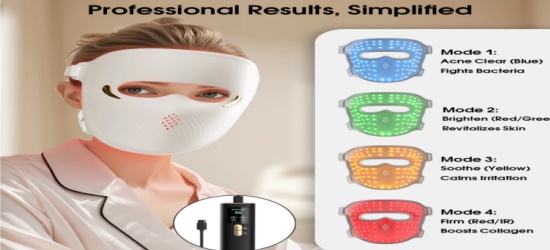
Not every user follows the same weekly schedule. One of the most helpful ways to think about a red light LED mask is to match it to your lifestyle.
A schedule of 2 to 3 sessions per week may be easier to maintain. This is a practical choice for people who want a simple routine without adding another daily step.
A schedule of 3 to 4 sessions per week often fits well into a steady weekly plan. Many at-home device guides fall into this range.
Some products may allow more regular sessions, including near-daily use, but only when that usage pattern is specifically stated in the product instructions. General guidance also notes that some masks are intended for only a few weekly sessions, while others may be used more often.
The key point is simple: let the device specification lead the schedule.
A common mistake is assuming that a red light LED mask must be used every day to fit into a “serious” routine. In reality, many home masks are built around several sessions per week rather than daily use. Sources we reviewed show that 3 to 5 times weekly is one of the most common patterns across consumer guidance, while some products suggest 2 to 3 times per week.
That makes daily use optional, not automatic. For many users:
a moderate weekly routine is easier to keep
the habit feels less time-consuming
the routine fits more naturally into evenings or self-care time
This can make the device more practical over the long term.
A red light therapy mask usually works best as part of a straightforward routine.
Start with clean, dry skin
Place the mask securely and comfortably
Run the device for the preset time or recommended session length
Finish the session and continue with the rest of your normal skincare routine if desired
Repeat on your chosen schedule
One source specifically notes starting with clean, dry skin and staying within the product’s recommended session length and weekly rhythm.
Habit | Why It Helps |
Clean, dry skin before use | Keeps the routine simple and comfortable |
Fixed days each week | Makes the habit easier to remember |
Same time of day | Helps build consistency |
Use the mask’s preset timer | Avoids overextending sessions |
Keep expectations realistic | Supports a more sustainable routine |
So, how often should you use a red light LED mask? For many home-use devices, a practical routine often falls in the range of 3 to 5 sessions per week, with 10 to 20 minutes per session, while some products are designed for lighter schedules such as 2 to 3 times weekly. The most important thing is not to chase the highest frequency—it is to follow the instructions for your specific device, begin with a manageable routine, and keep the schedule consistent enough to become part of regular use.
At Shenzhen Mezans Technology Co., Ltd., we believe a good beauty device should be easy to understand and easy to fit into everyday life. If you are exploring a red light therapy mask and want to learn more about practical usage routines, device design, and user-friendly LED mask solutions, you are welcome to learn more through Shenzhen Mezans Technology Co., Ltd. and contact our team for further information.
For many at-home LED masks, a common routine is around 3 to 5 times per week, though some devices suggest 2 to 3 times weekly depending on design and preset program length.
Yes. Some guidance suggests starting with fewer sessions, such as 1 to 3 times per week, then adjusting gradually if the device instructions allow it and the routine feels comfortable.
Many home-use references point to a session length of about 10 to 20 minutes, although exact timing depends on the specific product and its built-in program.
Not always. Many products are designed for several sessions per week rather than mandatory daily use, so the best approach is to follow the manufacturer’s stated routine for that specific mask.


